

BGE’s EV Customer Experience
Turning fragmented EV information into a clearer, mobile-first customer experience.
Impact:
Took the EV experience from concept to a validated, implementation-ready pilot in one year, using a team roughly one-third the size of a typical funded team.
Role:Senior Experience Designer · Design lead for the pilot
Experience direction, customer flows, high-fidelity prototypes, scenario states, interaction patterns
Owned:Led:Day-to-day design continuity and guidance for three designers.
Partnered with:Business & data stakeholders, design leadership, architecture/development.
The Challenge:
EV customers needed a clearer way to understand their energy usage, potential savings, and available programs, but the information lived across multiple systems and vendors. The challenge wasn't simply designing another app feature—it was translating complex data, pricing logic, and customer scenarios into an experience people could actually understand and act on.
The 4 decisions
01 — Start with what already existed.
I combined existing journeys, personas, and service blueprints from adjacent teams with new stakeholder and customer research. This gave us a stronger starting point without duplicating work that already existed.
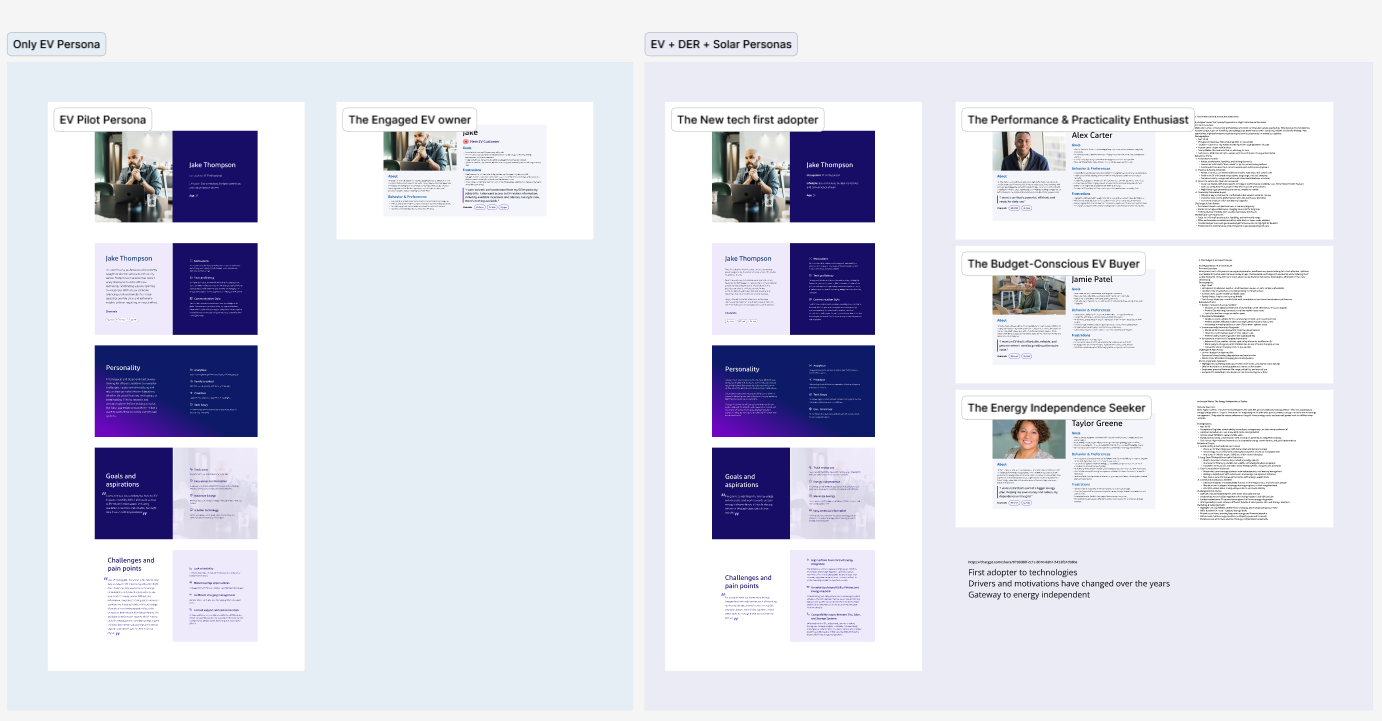
Image: From EV and Solar to only EV personas.
02 — Let customer behavior change the product direction.
The original concept mirrored the existing web billing experience. Testing revealed that EV customers managed most of their experience from their phones, so I pushed the concept toward a mobile-first model with web as a secondary experience.
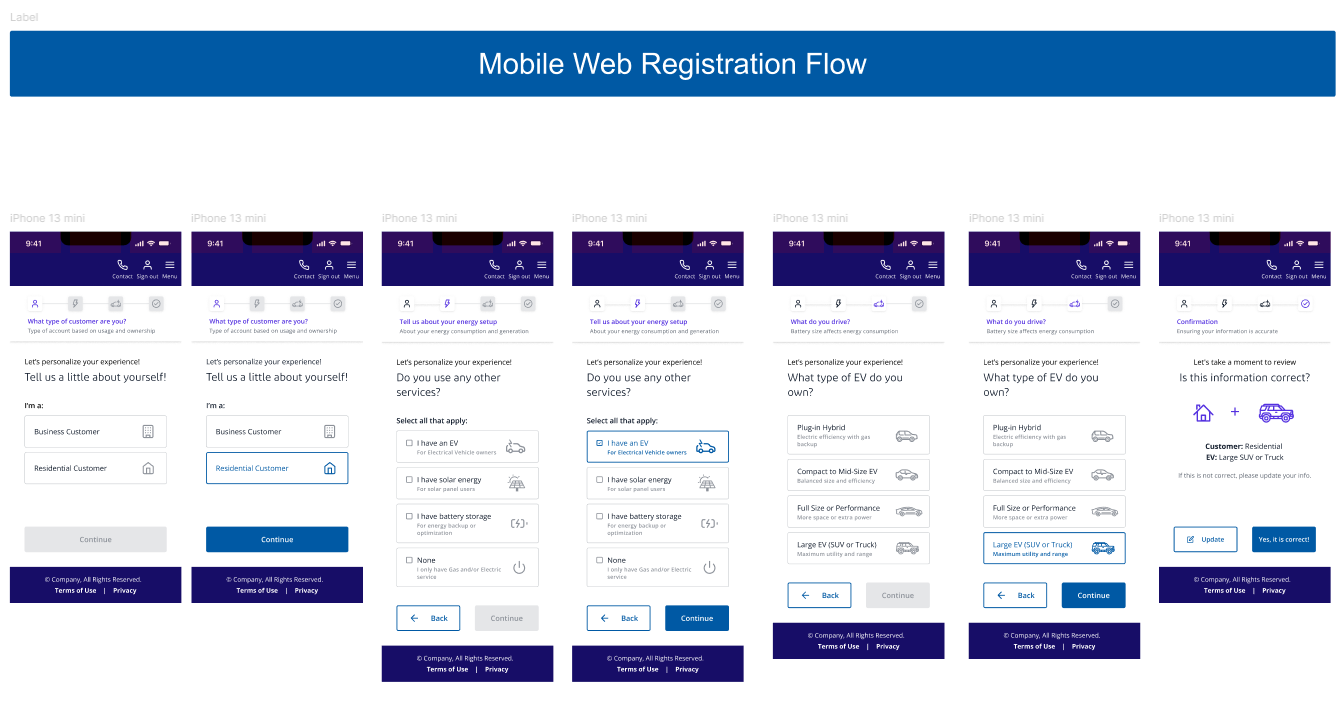
Image: First mockups for web-mobile before testing and moving to thru mobile.
03 — Design the logic before polishing the interface.
The experience depended on different combinations of customer data, savings calculations, and program eligibility. I modeled those scenarios in Excel first, then translated the underlying logic into four high-fidelity prototypes with component-level states and mapped the data requirements for architecture.
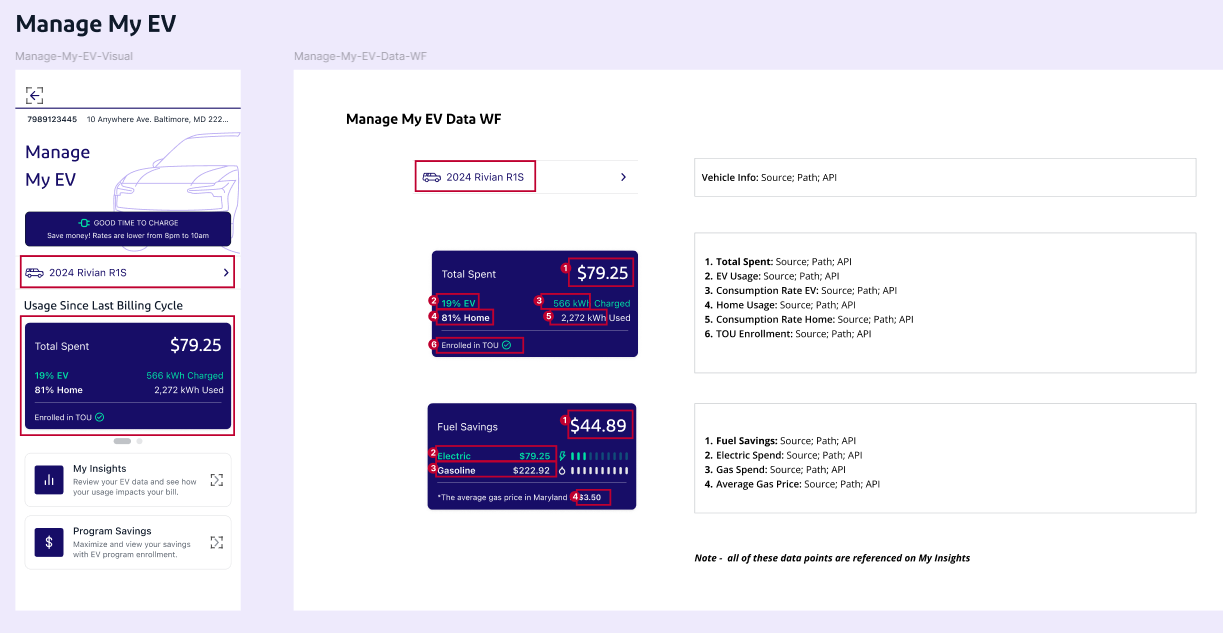
Image: Data mapping of the app to collaborate with architecture and developers.
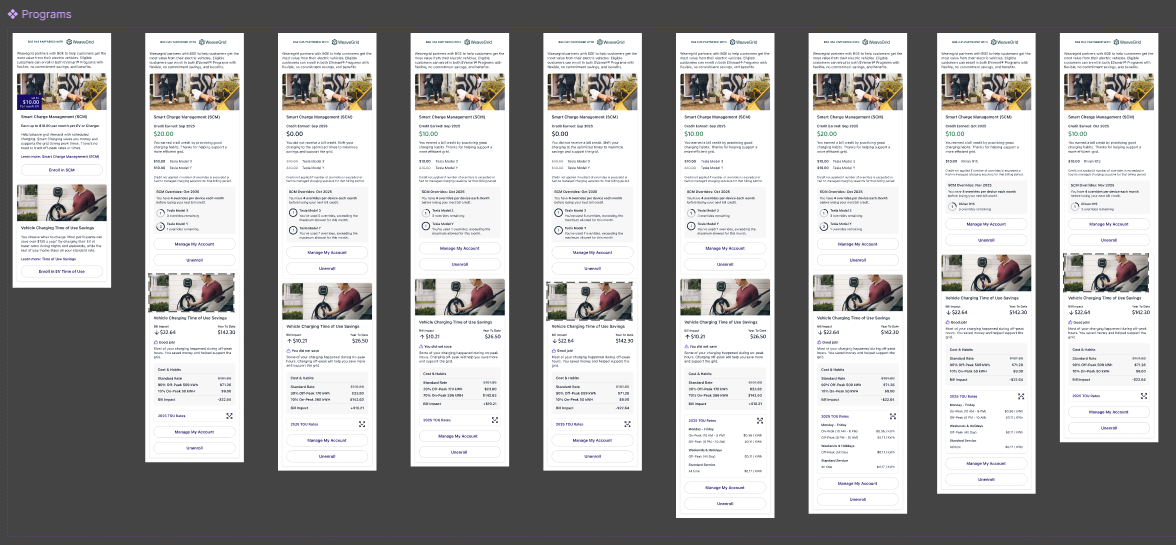
Image: Different scenarios of my programs section
04 — Lead through ambiguity and team change.
As designers rotated through the project, I maintained continuity across the experience, onboarded new designers, guided design direction, and kept the work moving through weekly milestones and presentations.
Results:
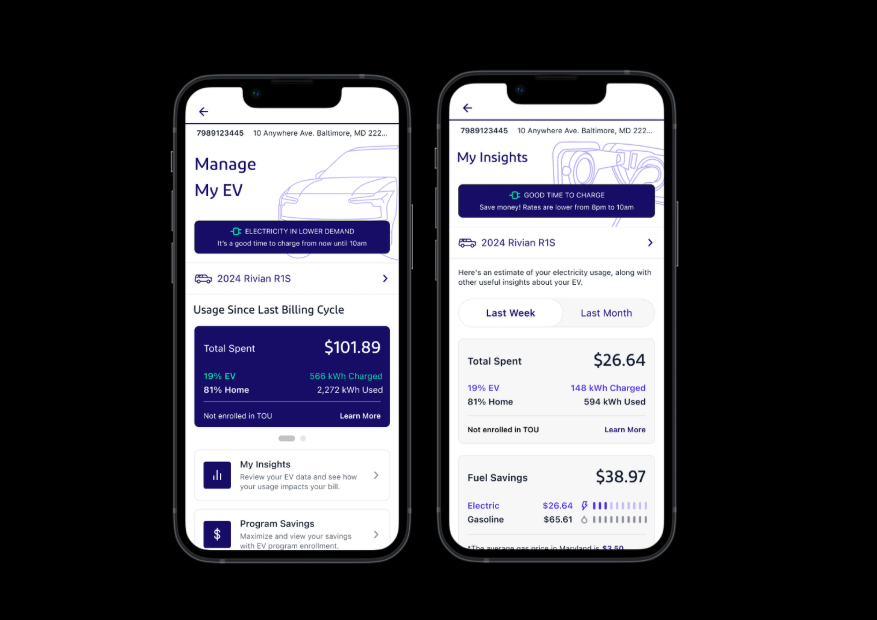
Image: Screenshots of the EV feature in the app showing the home screen to the left and my insights section on the right.
Validated customer experience:
Customer testing showed the new experience was easier to understand and a significant improvement over the existing experience.
Lean pilot model:
Delivered with a team roughly one-third the size of a typical funded team.
Cross-functional foundation:
Established the experience, scenario logic, and data requirements needed to move toward implementation.
Leadership through ambiguity:
Maintained design continuity while guiding designers through a changing team.
Customer Feedback
These insights emerged from the last round of customer testing across a range of scenarios and use cases.
World context: Rising energy costs and broader economic pressures are making affordability a growing concern for households. As customers look for ways to better manage their expenses, energy providers have an increasing responsibility to make usage, costs, savings opportunities, and available programs easier to understand.
“Every time I compare it to gas, I just feel better… Knowing that I’m saving must mean that I made the right decision”
Customer“Compared to what is now, I feel this would be a huge improvement.”
Customer“Everything’s right there for you to see. It’s easy to follow and you know what you’re saving”
CustomerUp Next:
I rethought how Exelon’s team designed, built, tested, and maintained emails, turning a fragmented and outsourced production process into a more accessible, efficient, and scalable workflow.